

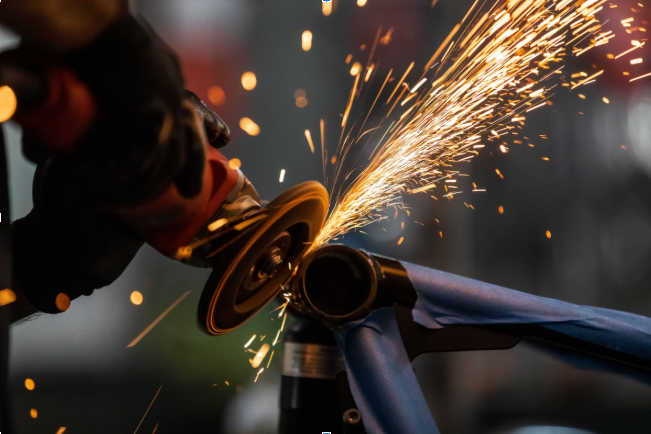
You have an important project on your plate. You’ve selected the right metal, maybe a tough steel or a specific alloy for the job. The piece has been cut, bent, and welded into shape. But what about the final surface finish? Polishing is that next step. It’s a process where an abrasive, like a compound on a buffing wheel or even super-fine sandpaper, is used to smooth out a metal surface. The process fundamentally changes the surface of the metal, and those changes bring some serious long-term advantages. You get a component that performs better and lasts longer.
A Stronger Defense Against Corrosion
A freshly fabricated metal surface looks solid to the naked eye. On a microscopic level, it’s full of tiny peaks and valleys. These little imperfections are perfect hiding spots for moisture, chemicals, and grease. That’s where rust and corrosion get their start. A little bit of trapped moisture on an iron surface can quickly become a problem. Polishing flattens those peaks and valleys. This creates a smooth, uniform surface finish that leaves nowhere for corrosive elements to hide. A polished piece of steel is simply harder for rust to grip. For any part or machine exposed to the environment, this process adds a powerful layer of protection and boosts longevity.
Easier and More Effective Cleaning
Think about cleaning a rough, unfinished metal surface versus one with a smooth, polished finish. The difference is night and day. Contaminants get trapped in the texture of an unpolished surface, making sanitation a real chore. You often need harsh chemicals or intense scrubbing that can cause more damage.
A polished surface is non-porous and slick. Dirt, oil, and grime have nothing to stick to. They wipe away cleanly, often with just a simple microfiber cloth. For industries where hygiene is a top priority, like food processing or pharmaceuticals, this makes cleaning faster and far more effective.
Reduced Friction and Wear
Your operation likely has moving parts. When two metal components rub against each other, the resulting friction generates heat and causes wear. Over time, this friction degrades the parts, reduces efficiency, and can lead to mechanical failure. A rough surface finish only exacerbates the issue.
Polishing creates an incredibly smooth plane that slashes friction between components. Your machine parts move more freely with less resistance. A polished pipe, for example, allows fluids to flow with less pressure and turbulence. This means your equipment runs cooler, uses less energy, and its moving parts last significantly longer.
Enhanced Structural Integrity
It might be surprising, but polishing can actually improve the structural strength of a metal part. The fabrication process itself can create tiny surface flaws. Things like micro-scratches or burrs from a grinding wheel can become weak points. Under stress or pressure, these tiny flaws are where fractures begin. The polishing process, by its very nature, removes that damaged outer layer of metal. Using a polishing tool and abrasive, we eliminate those microscopic defects. Creating a flawless surface removes the starting points for potential cracks, which improves the overall durability and fatigue life of the component.
The Unmistakable Look of Quality
Let’s be honest, appearance makes a statement. A polished component, whether it’s a bright copper pipe, a reflective brass fitting, or a gleaming steel panel, looks professional. It communicates a high level of quality and attention to detail that reflects on your entire facility. Achieving a near-mirror finish shows that you value precision in every part of your operation. This visual impact is especially powerful in appearance-driven fields like the automotive industry, where a flawless finish is directly linked to perceived value. It tells everyone that you invest in quality from the ground up.
Advanced Options Like Electropolishing
Mechanical polishing with a wheel is a fantastic and common method. For some applications, you can go a step further with a process called electropolishing. This advanced technique uses an electrochemical reaction, not a physical abrasive, to remove a microscopic layer from the metal.
Electropolishing is incredibly precise. It can reach into complex shapes and internal areas where traditional polishing tools or grinding wheels simply cannot go. The result is a supremely smooth, clean, and passive surface. This offers the ultimate defense against corrosion and is a top-tier choice for high-purity and high-performance applications.
Get the Right Finish for Your Project Today
Your project deserves a finish that protects its value and performance for years. At TORNQVIST, we offer comprehensive polishing services within our 27,500 sq. ft. facility. Our major fabricating equipment can handle your specific needs, giving your metal components the durability and superior surface finish they require. Don’t let the final step be an afterthought.